
Performance
Solo Recital · Chamber Music · Piano and Orchestra · Contemporary Music
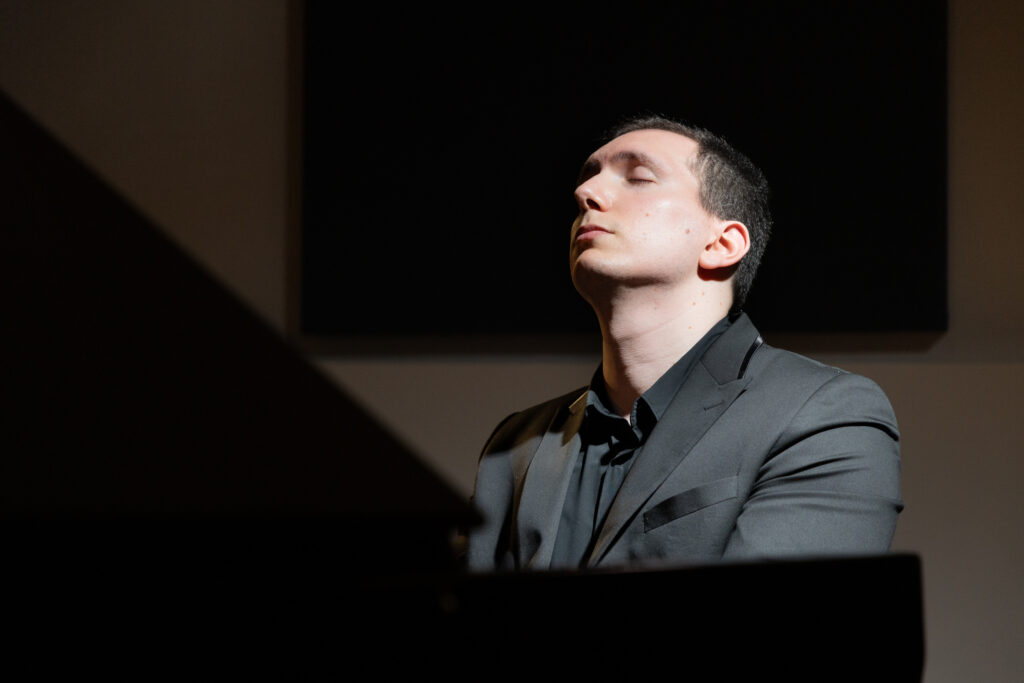
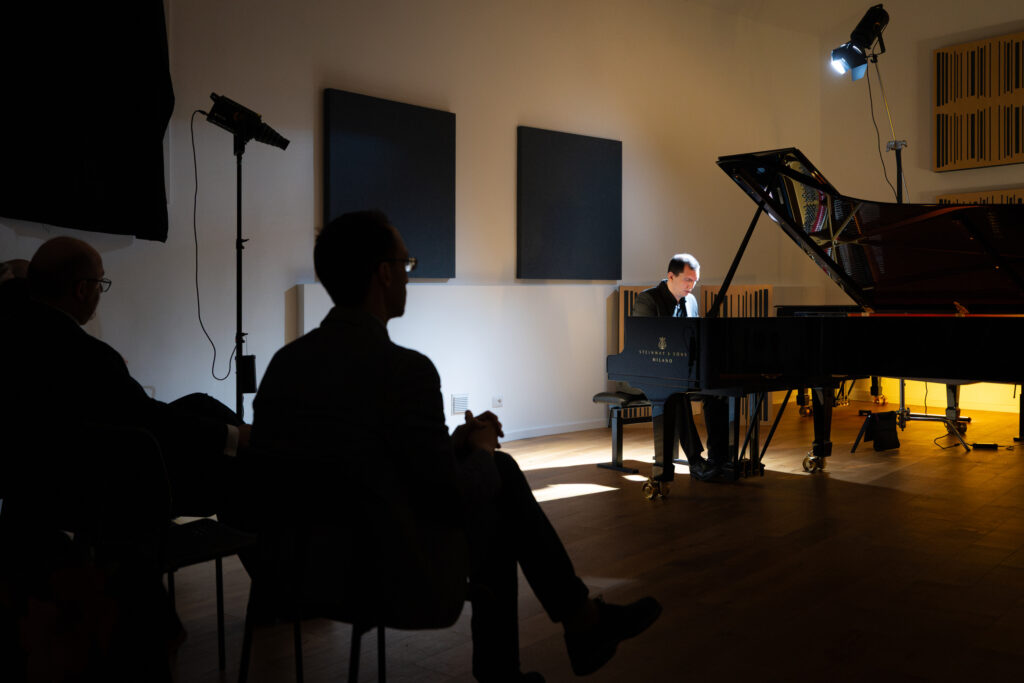
SOLO RECITAL
Programmes conceived as a continuous experience, from the opening work to the final silence.
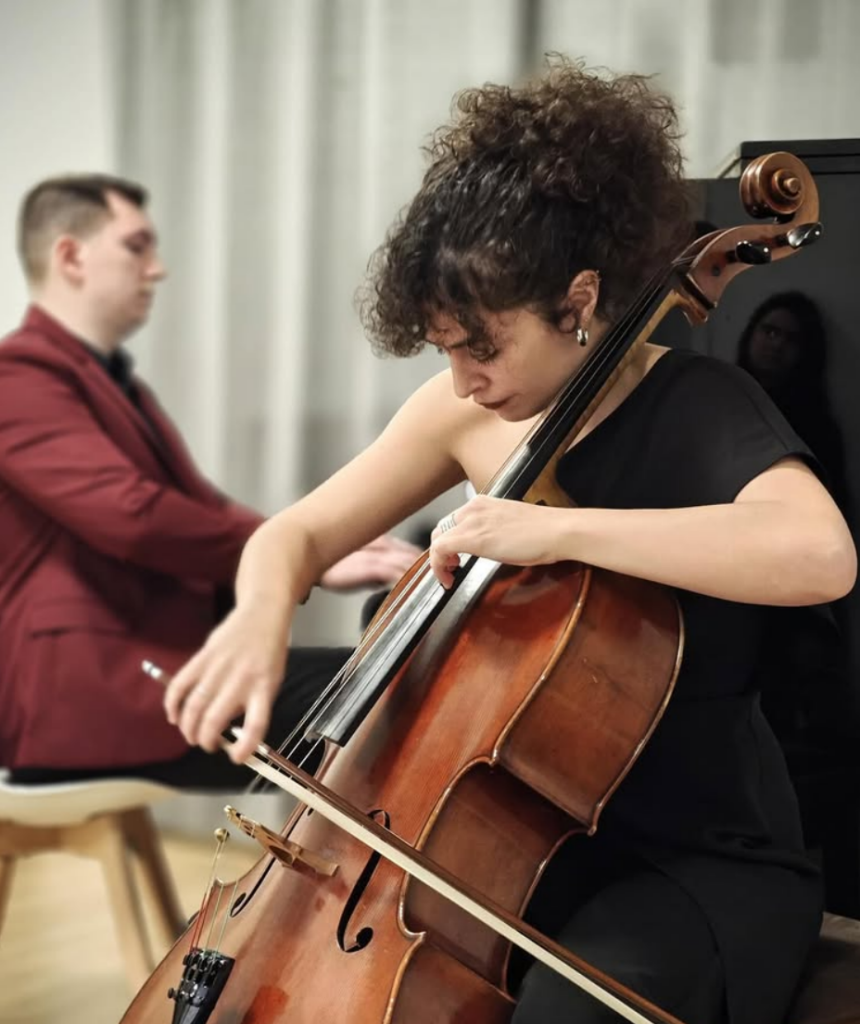
CHAMBER MUSIC
Performance as conversation, balance and shared musical construction.
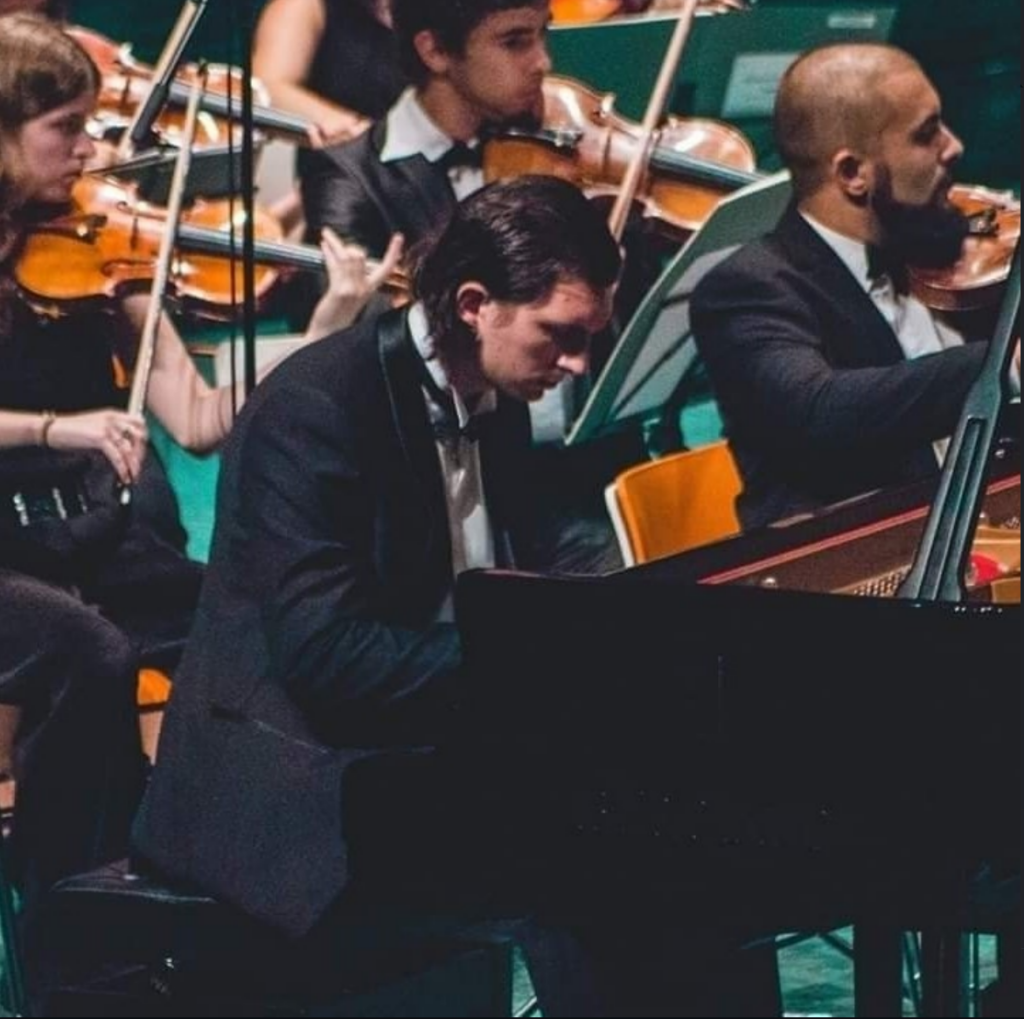
PIANO AND ORCHESTRA
Personal interpretations shaped through dialogue with the conductor and orchestra.
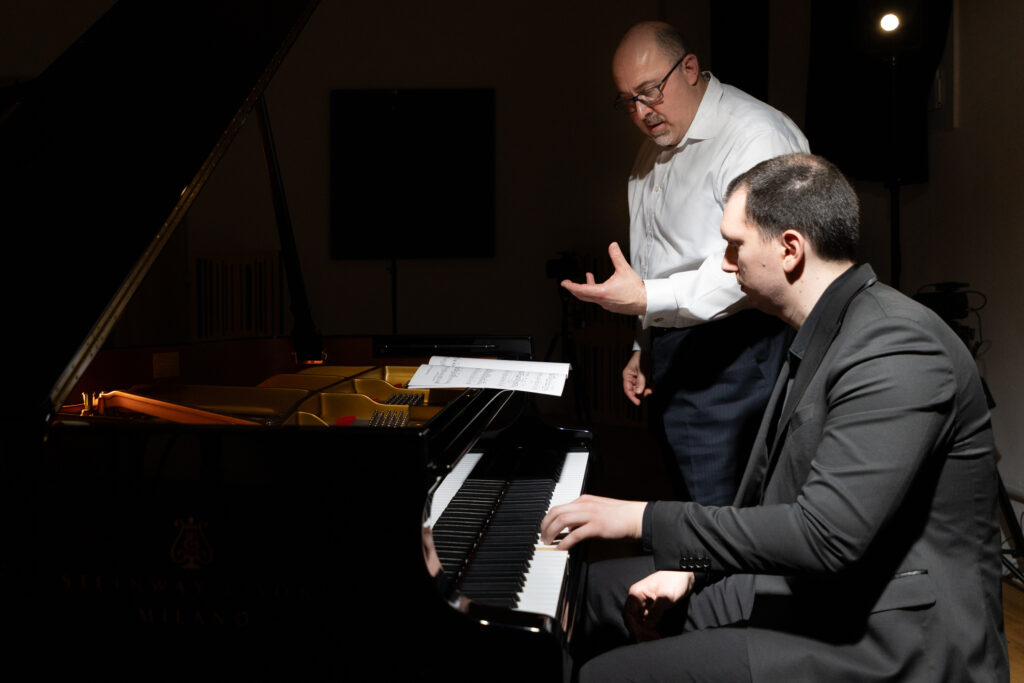
CONTEMPORARY MUSIC
Premieres and collaborations developed through direct dialogue with living composers.
SOLO RECITAL
Three proposals built around specific musical ideas, with contrasting repertoire and durations. The programmes can be adapted to the venue, available time and programming context.
Light and Shadow
A journey through different facets of Russian music, drawing on the repertoire of Eclipse and Portraits. The programme moves through Prokofiev’s irony and momentum, Scriabin’s introspection, Tchaikovsky’s lyricism, Rimsky-Korsakov’s colour, Medtner’s poetic depth and Rachmaninoff’s emotional breadth. Its title refers to the contrasts that shape the recital: intimacy and expansiveness, melancholy and energy, clarity and mystery.
Programme
- Sergei Prokofiev:March, Op. 12 No. 1, and Gavotte, Op. 12 No. 4.
- Alexander Scriabin: Étude in C-sharp minor, Op. 2 No. 1, and Feuillet d’album, Op. 45 No. 1.
- Pyotr Ilyich Tchaikovsky:Nocturne, Op. 19 No. 4, and Valse sentimentale, Op. 51 No. 6.
- Nikolai Rimsky-Korsakov:Pesenka, Prelude-Improvisation, Op. 38 No. 1, and Mazurka, Op. 38 No. 2.
- Nikolai Medtner:Canzona serenata, Op. 38 No. 6.
- Sergei Rachmaninoff: selection of Preludes from Opp. 23 and 32.
Duration: 50–55 minutes.
Status: available programme, comprising repertoire already performed and recorded.
Possible formats
- Essential version of approximately 50 minutes.
- Extended version including a selection from Pictures at an Exhibition.
- Complete album-based version with interval.
- Commentated recital exploring the composers and the origins of both recording projects.
Architectures of Transformation
Bach, Beethoven, Granados and Liszt reveal different ways of receiving and transforming a pre-existing musical structure. The programme moves from contrapuntal clarity to formal expansion, theatrical character and dance transformed into narrative, virtuosity and vertigo. Form emerges not as a static construction, but as a living architecture that changes over the course of the recital.
Essential version · 48–52 minutes
- Johann Sebastian Bach: Prelude and Fugue in C major, BWV 870.
- Ludwig van Beethoven: Piano Sonata No. 21 in C major, Op. 53, “Waldstein”.
- Enrique Granados:El fandango de candil.
- Franz Liszt:Mephisto Waltz.
Extended version · Approximately 60 minutes
- Johann Sebastian Bach: Prelude and Fugue in C major, BWV 870.
- Ludwig van Beethoven: “Waldstein” Sonata, Op. 53.
- Enrique Granados:El pelele.
- Enrique Granados:El fandango de candil.
- Franz Liszt:Valse de l’opéra Faust de Gounod.
- Franz Liszt:Mephisto Waltz.
Status: programme in preparation. It can be presented in an essential or complete version, with a focus on dance and theatricality, or as a commentated recital exploring the historical transformation of musical forms.
Metamorphosis · Major Recital or Cycle
A project devoted to variation both as a musical procedure and as a metaphor for transformation. Each theme retains a recognisable part of its identity while continually changing in character, texture, harmony, rhythm and meaning. The journey connects Mendelssohn’s formal concentration, Schumann’s psychological and symphonic expansion, and Rachmaninoff’s dialogue with the musical memory of the past.
Programme
- Felix Mendelssohn:Variations sérieuses, Op. 54.
- Robert Schumann:Symphonic Etudes, Op. 13.
- Sergei Rachmaninoff: Variations on a Theme of Chopin, Op. 22.
- Sergei Rachmaninoff: Variations on a Theme of Corelli, Op. 42.
Formats
- Complete 85–95-minute programme with interval.
- Two-recital cycle: Mendelssohn and Schumann as the first concert.
- The two Rachmaninoff works as the second concert.
- Condensed version of approximately one hour.
- Commentated recital on identity, continuity and transformation.
Status: project in development; the repertoire is currently at different stages of preparation.
CHAMBER MUSIC
Established projects and collaborations developed around the individual identity of each ensemble. The repertoire ranges from Romanticism to twentieth-century music and contemporary creation.
Duo Malhaya · Roots and Passions
Duo Malhaya develops a musical direction centred on Romantic, nationalist and deeply expressive repertoire. The collaboration is built on breadth of phrasing and the shaping of large emotional arcs: the cello functions as an extension of the human voice, while the piano contributes harmonic depth, rhythmic momentum and an almost orchestral dimension.
Roots and Passions
The programme explores different ways in which emotion and cultural identity can be transformed into music. It begins with Spanish folk tradition, moves through virtuosity and dance, enters Rachmaninoff’s Romantic world, and culminates in the tension, sensuality and energy of Piazzolla.
- Manuel de Falla: selection from Siete canciones populares españolas.
- Gaspar Cassadó:Suite for Solo Cello.
- Sergei Rachmaninoff: Cello Sonata in G minor, Op. 19.
- Astor Piazzolla:Le Grand Tango.
Duration: 70–80 minutes, depending on the number of Falla songs included.
Status: repertoire performed or prepared by the duo.
Possible formats
- Complete programme with interval.
- Condensed version of approximately 50 minutes.
- Spanish first half featuring Falla and Cassadó.
- Romantic and Latin American second half featuring Rachmaninoff and Piazzolla.
- Programme devoted to Spanish and Ibero-American music.
- Commentated recital on folklore, identity and expression.
Dumki Trio · Between Shadows and Dances
Dumki Trio was formed in Cleveland as a violin, cello and piano ensemble devoted to the major Classical and Romantic repertoire. Its name comes from Dvořák’s “Dumky” Trio, whose alternation between melancholy, lyricism, vitality and dance reflects the expressive richness the ensemble seeks in chamber performance.
Between Shadows and Dances
The programme brings together two works shaped by contrast. In Beethoven’s “Ghost” Trio, the energy of the outer movements surrounds a dark and unsettling central episode. In Dvořák’s “Dumky” Trio, traditional form gives way to a free succession of episodes alternating contemplation, melancholy, dance and exaltation.
- Ludwig van Beethoven: Piano Trio in D major, Op. 70 No. 1, “Ghost”.
- Antonín Dvořák: Piano Trio in E minor, Op. 90, “Dumky”.
Duration: 60–70 minutes.
Status: repertoire performed by the ensemble.
Possible formats
- Complete programme featuring both works.
- Selection of movements for shorter concerts.
- Commentated recital on the development of the piano trio.
- Programme devoted to Central European music and the relationship between art music and folk elements.
Entartete Duo · Cello and Piano
Entartete Duo focuses particularly on twentieth- and twenty-first-century repertoire, the rediscovery of less frequently performed works, and music of distinctive timbral and expressive richness. The project seeks to develop programmes with a clear conceptual identity, bringing composers and works that remain outside conventional programming into the foreground.
Selected Programme · Music Behind the Lines
A journey beginning with spiritual lament and moving through suspension, serenity, hope and dance.
- Ernest Bloch — Prayer.
- Francis Poulenc — Cavatina.
- Ottorino Respighi — Adagio con Variazioni.
- Erich Wolfgang Korngold — Tanzlied des Pierrot.
Duration: 30–40 minutes.
Artistic Focus
Twentieth- and twenty-first-century repertoire, musical rediscovery, research, colour and collaboration with living composers.
Status: project in development, with the intention of progressively expanding its programmes, concerts, recordings and collaborations.
Developing Chamber-Music Directions · New Repertoire and Ensembles
One of my main aims is to establish a permanent ensemble through which to develop a distinctive artistic identity, explore repertoire in depth over time, and make chamber music a regular part of my activity. Continuity makes possible a degree of knowledge, trust and musical understanding that is difficult to achieve through isolated collaborations.
Cello and Piano Duo
Developing a Romantic and post-Romantic strand centred around the sonatas of Rachmaninoff and César Franck.
Piano Quartets
Preparing the major quartets by Brahms and Dvořák, combining chamber intimacy, formal complexity and an almost orchestral sonority.
Piano Quintets
Revisiting the Schumann and Brahms quintets from a more mature interpretative perspective.
Long-Term Projects
Creating concerts, thematic cycles, audiovisual recordings and collaborations with festivals or musical institutions.
Status: directions for future development, not yet presented as immediately available programmes.
PIANO AND ORCHESTRA
Orchestral experience includes repertoire performed in Spain, Europe and the United States, together with developing projects aimed at new professional collaborations.
Repertoire Performed with Orchestra · Rachmaninoff and Tchaikovsky
Works performed
- Sergei Rachmaninoff: Piano Concerto No. 2 in C minor, Op. 18.
- Sergei Rachmaninoff: Piano Concerto No. 3 in D minor, Op. 30.
- Pyotr Ilyich Tchaikovsky: Piano Concerto No. 1 in B-flat minor, Op. 23.
Status: works previously performed with orchestra. Current availability should be confirmed according to the revision and preparation requirements of each project.
Selected Orchestral Experience · Europe and the United States
Solo appearances include collaborations with:
- Orquesta Sinfónica de la Escuela Superior de Música de Cataluña
Barcelona · Xavier Puig - Toruń Symphony Orchestra
Koronowo, Poland · Przemysław Fiugajski - Orquesta Sinfónica Profesional de Cartagena
Cartagena · Andrés Pérez Bernabé - Joven Orquesta Sinfónica de Cartagena
Cartagena · Álvaro Pintado - Cleveland Institute of Music Orchestra
Cleveland, United States · Carl Topilow
Rachmaninoff · Five Works for Piano and Orchestra Across Two Programmes
Project in development: performing all four piano concertos and the Rhapsody on a Theme of Paganini across two orchestral programmes.
The proposal offers a journey through different stages of Rachmaninoff’s musical language, presenting his complete output for piano and orchestra as a unified project.
Rachmaninoff I · Youth and Modernity
- Piano Concerto No. 1 in F-sharp minor, Op. 1.
- Piano Concerto No. 4 in G minor, Op. 40.
- Rhapsody on a Theme of Paganini, Op. 43.
Rachmaninoff II · The Great Concertos
- Piano Concerto No. 2 in C minor, Op. 18.
- Piano Concerto No. 3 in D minor, Op. 30.
Status: open to collaboration with orchestras and concert presenters.
New Repertoire Directions · Projects in Preparation
Current priorities include Prokofiev’s Piano Concerto No. 2 and various possibilities within the repertoire of Chopin, Liszt and Shostakovich. Concertos by Mozart, Schumann and Grieg form part of previously studied repertoire, although they have not yet been performed with orchestra.
The expansion of the repertoire is primarily focused on new works and sustained professional collaborations.
CONTEMPORARY MUSIC
Projects are developed through exchange between composer and performer, from the preparation of the work through to its premiere, recording or adaptation into an audiovisual format.
Completed Premieres and Collaborations · Selected Projects
José Luis López García · Mirando al Thader
The project made it possible to build the interpretation from its very origins, through score study, sonic experimentation and direct contact with the composer, without relying on an established performance tradition.
Stefano Corvino · Korean Inventions, Op. 2
The project brought together the preparation of a new work, direct dialogue with its composer, the joint development of an interpretative vision and the creation of an audiovisual document for its subsequent dissemination.
Other Composers Performed
- Antón García Abril
- Miguel Ángel Gómez Martínez
- Manuel Ruiz del Corral
A direct artistic relationship was also developed with Antón García Abril, alongside performances of a significant part of his output. These collaborations make it possible to understand the personality behind each work and to work with points of reference that do not depend exclusively on the score.
New Avenues for Collaboration · Commissions, Premieres and Interdisciplinary Projects
I am particularly interested in collaborations developed over a sufficiently long period to understand a composer’s language and shape the interpretation together. The aim is not simply to add new works to the repertoire, but to establish meaningful artistic relationships and generate outcomes capable of continuing beyond a single performance.
Projects I Am Particularly Interested in Developing
- Commissions for solo piano.
- Works for piano and chamber ensembles.
- Projects for piano and orchestra.
- World premieres.
- Professional audio and video recordings.
- Artistic residencies with composers.
- Single-composer programmes devoted to a living composer.
- Music for film and video games.
- Projects involving image, video or electronic media.
- Programmes connecting contemporary and historical repertoire.
Music for Audiovisual Media and New Creative Languages
Contemporary creation can extend into music for film, video games, the stage and other audiovisual formats. Composers such as Takeshi Furukawa and Mason Bates are of particular interest for the relationships they establish between musical language, technology, narrative and image.
Potential forms of collaboration: commissions, premieres, recordings, stage projects and interdisciplinary productions.
Do you have a work or project we could develop together?
I am open to commissions, premieres, recordings and projects that allow an interpretation to develop through direct dialogue and shared artistic work.